

Warsh, presidente de la Fed, señala una nueva era para las tasas y el riesgo
El alejamiento de la Fed de la orientación futura podría significar mayores costos de endeudamiento, mejores rendimientos y nuevos riesgos de inflación
Lectura de 5 minutos
PUNTOS CLAVE
- En su intervención en el Simposio Económico anual de Jackson Hole, el presidente de la Fed, Kevin Warsh, señaló un alejamiento de la orientación hacia adelante, lo que aumenta la incertidumbre en torno a las futuras decisiones sobre las tasas de interés.
- Los inversores pueden beneficiarse de primas de riesgo más altas y mejores rendimientos, mientras que los prestatarios podrían enfrentar mayores costos de financiamiento.
- La inflación sigue siendo una preocupación clave, y las tendencias históricas sugieren que la Fed podría necesitar actuar con decisión para evitar que las presiones sobre los precios se aceleren.
Mientras escribo esto, el presidente de la Fed, Kevin Warsh, acaba de terminar su discurso en el Simposio Económico anual de Jackson Hole, el primero como presidente del Comité Federal de Mercado Abierto (FOMC). Sus comentarios están siendo tomados por los mercados de capitales como algo "agresivos", ya que las probabilidades de un aumento de tasas en la reunión de septiembre del FOMC han aumentado de alrededor del 30% a una probabilidad de 50/50 de que la Fed actúe.
Un enfoque clave para el presidente Warsh en el futuro es que la Fed hable menos, ya que cree que el concepto de "orientación futura" ha dejado de ser útil. Cuando la Fed use su lenguaje para telegrafiar sus acciones futuras, los mercados "adelantarán" la acción y valorarán ese resultado hoy. En el pasado reciente, la orientación futura era generalmente hacia tasas más bajas, lo que significaba que el mercado de bonos descontaría futuros recortes de tasas, lo que resultaría en tasas actuales más bajas. Eso está bien si el futuro resulta como lo ve la Fed, justificando sus acciones futuras. Desafortunadamente, como señaló el Presidente Warsh en su discurso de hoy, la Fed ha cometido algunos errores materiales en sus pronósticos. ¿Alguien recuerda las declaraciones de la Fed de que el aumento de la inflación de 2022 fue "transitorio", por lo que mantuvieron las tasas en 0% durante demasiado tiempo? A pesar de toda su capacidad intelectual, modelos econométricos complejos y doctorados, la capacidad de pronóstico de la Fed está lejos de ser perfecta.
El resultado de la orientación futura es que los riesgos están fuera del mercado. Sin embargo, es importante destacar que el riesgo no desaparece; Los inversores simplemente ya no son compensados por asumir el riesgo. Por lo tanto, como inversor, el entorno que describe el presidente Warsh es mejor. Obtener una compensación por el riesgo significa que un inversor puede obtener una mayor tasa de rendimiento al invertir y mantener un activo. En el mercado de bonos, eso significa tasas de interés más altas.
Por otro lado, los prestatarios quieren tasas más bajas. La orientación futura ha sido beneficiosa para ellos y un cambio en la política puede muy bien significar mayores costos de endeudamiento para los consumidores, las empresas y las entidades públicas. Entonces, ¿no es mala la idea de un nuevo régimen de tasas más altas? Un mayor costo de los préstamos podría reducir el atractivo de algunos proyectos, contribuir a dificultar la asequibilidad de la vivienda y aumentar la carga de costos de intereses del gobierno federal. Sin embargo, la era de la represión de las tasas de interés condujo a decisiones de asignación de capital subóptimas y a la capacidad de algunos para pedir dinero prestado con poco o ningún costo. En el caso de este último, estoy mirando directamente al gobierno federal.
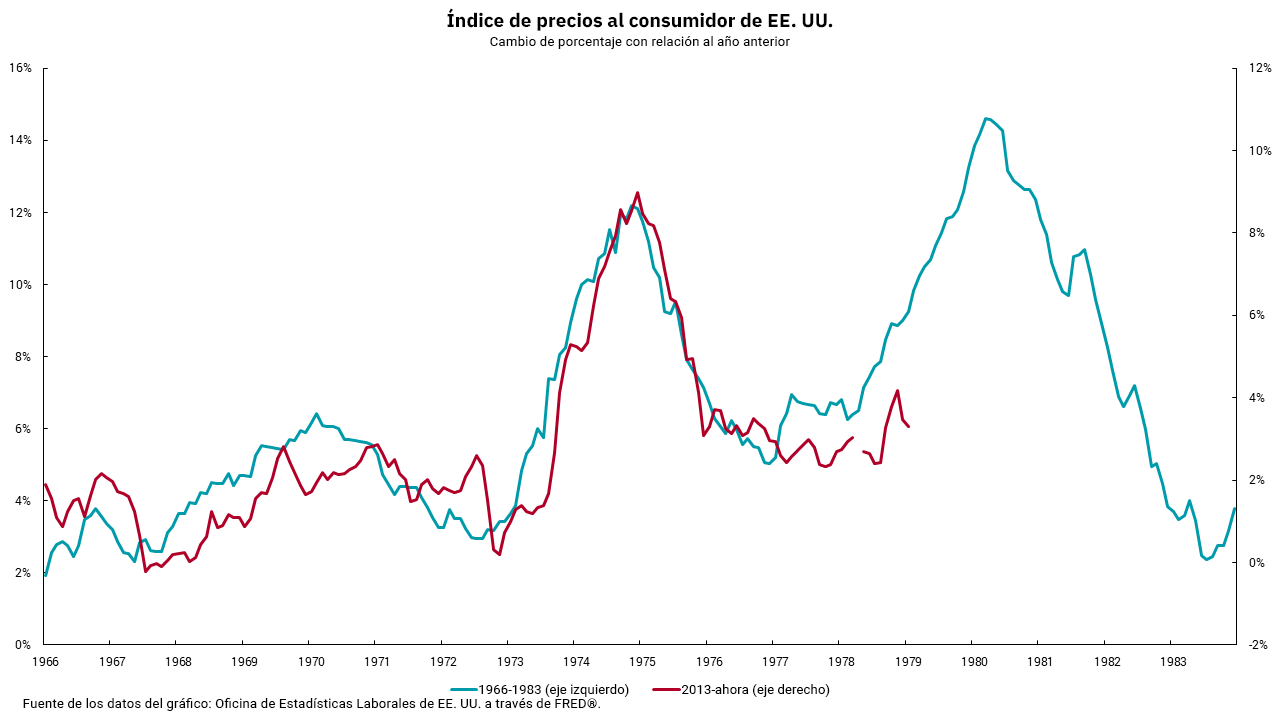
Con todo esto en mente, nuestro gráfico de esta semana destaca otro riesgo que la Fed está tomando si juzga mal el entorno actual y no actúa ante las crecientes presiones inflacionarias. Históricamente, la inflación ha tendido a venir en oleadas. El gráfico superpone el período inflacionario de 1966-1983 con el período de 2013 a hoy. No es necesario ser un estadístico para ver un ajuste ajustado al entorno actual ni un economista para decir que no queremos que el gráfico que representará el período actual se parezca al período anterior. La medicina para la inflación puede no tener buen sabor, pero es posible que la necesitemos.
Obtenga By the Numbers en su bandeja de entrada.
Suscríbase (Se abre en una pestaña nueva)