


Una historia de dos mercados inmobiliarios
Si es el "mejor de los tiempos" o el "peor de los tiempos" depende de su punto de vista
Lectura de 6 minutos
¿Cómo es el mercado de la vivienda? Si ya está en el mercado y ha sido dueño de su casa por algún tiempo, es posible que no vea un problema. Esto se debe a que es probable que tenga una hipoteca con tasas bajas de una compra o refinanciamiento que hizo durante el período de tasa hipotecaria ultrabaja asociado con la pandemia. Desde entonces, el valor de las viviendas ha aumentado sustancialmente, lo que significa que su garantía hipotecaria es positiva. Sin embargo, para aquellos que intentan ingresar al mercado de la vivienda, es un desastre. Las tasas hipotecarias de viviendas rondan el 7%, y los precios de las viviendas, en promedio nacional, continúan aumentando, lo que hace que la asequibilidad se mantenga cerca de mínimos históricos.
Con todo esto en mente, nuestro gráfico de esta semana muestra varias medidas relacionadas con el mercado de la vivienda: el índice general de la Asociación Nacional de Constructores de Viviendas (NAHB), junto con las ventas actuales, las ventas futuras y las medidas de tráfico peatonal. Al igual que con muchos índices, una lectura por encima de 50 es expansiva, mientras que una lectura por debajo de 50 es contractiva. En base a esto, es difícil ver algo bueno sobre el mercado de la vivienda, ya que las cuatro medidas están empantanadas por debajo de 50. ¿Qué podría deparar el futuro?
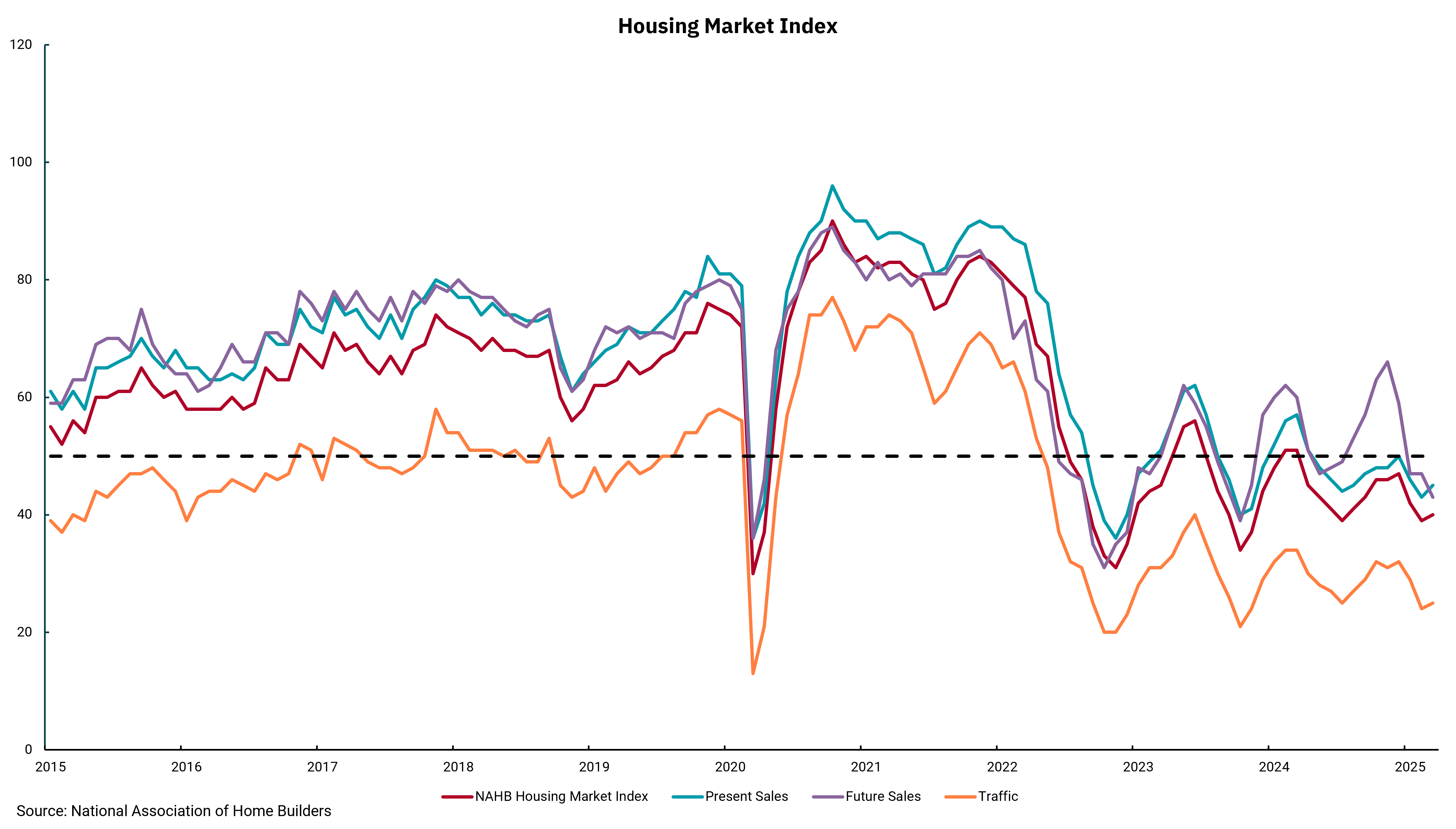
Por un lado, la oferta parece seguir siendo limitada. Los propietarios existentes con tasas hipotecarias muy por debajo de las tasas prevalecientes del mercado detestan vender sus casas y perder sus beneficios financieros. Esto significa que la principal fuente de suministro son las casas nuevas. A pesar de que los precios de la madera están disminuyendo a medida que la madera canadiense evitó los aranceles, el costo total de construir una casa continúa aumentando a medida que los aranceles afectan a un amplio espectro de materiales de construcción, mientras que los costos de la tierra y la mano de obra siguen siendo altos.
El alivio de tasas también puede ser difícil de conseguir. La reunión más reciente de la Federal Open Market Committee (FOMC) - Comité Federal de Mercado Abierto (FOMC, en inglés) terminó sin ninguna acción sobre las tarifas. Los comentarios posteriores a la reunión del presidente de la Fed, Powell, citaron un alto grado de incertidumbre con el riesgo de una mayor inflación y un menor crecimiento. Con base en esa perspectiva, parecería poco probable que la Fed se mueva rápidamente hacia tasas más bajas a menos que veamos que la actividad económica se deteriora rápidamente, específicamente en el mercado laboral. Nuestra lectura más reciente sobre el desempleo mostró que la tasa nacional se mantuvo estable en 4.2%.
Sabemos que los bienes raíces varían según el mercado, y hay algunos mercados donde se está produciendo una debilidad en el precio de la vivienda. En general, la parte suroeste del país, incluidos Texas y Arizona, junto con Florida, están viendo las tendencias de precios más débiles. Estos son también los mercados donde los precios subieron más, lo que significa que se podrían esperar algunos ajustes de precios a medida que la nueva oferta de viviendas unifamiliares y multifamiliares entre en línea. Sin embargo, en términos generales, Estados Unidos sigue invirtiendo poco en vivienda, lo que significa que la asequibilidad de la vivienda podría seguir siendo difícil en el futuro previsible.
Obtenga By the Numbers en su bandeja de entrada.
Suscríbase (Se abre en una pestaña nueva)